
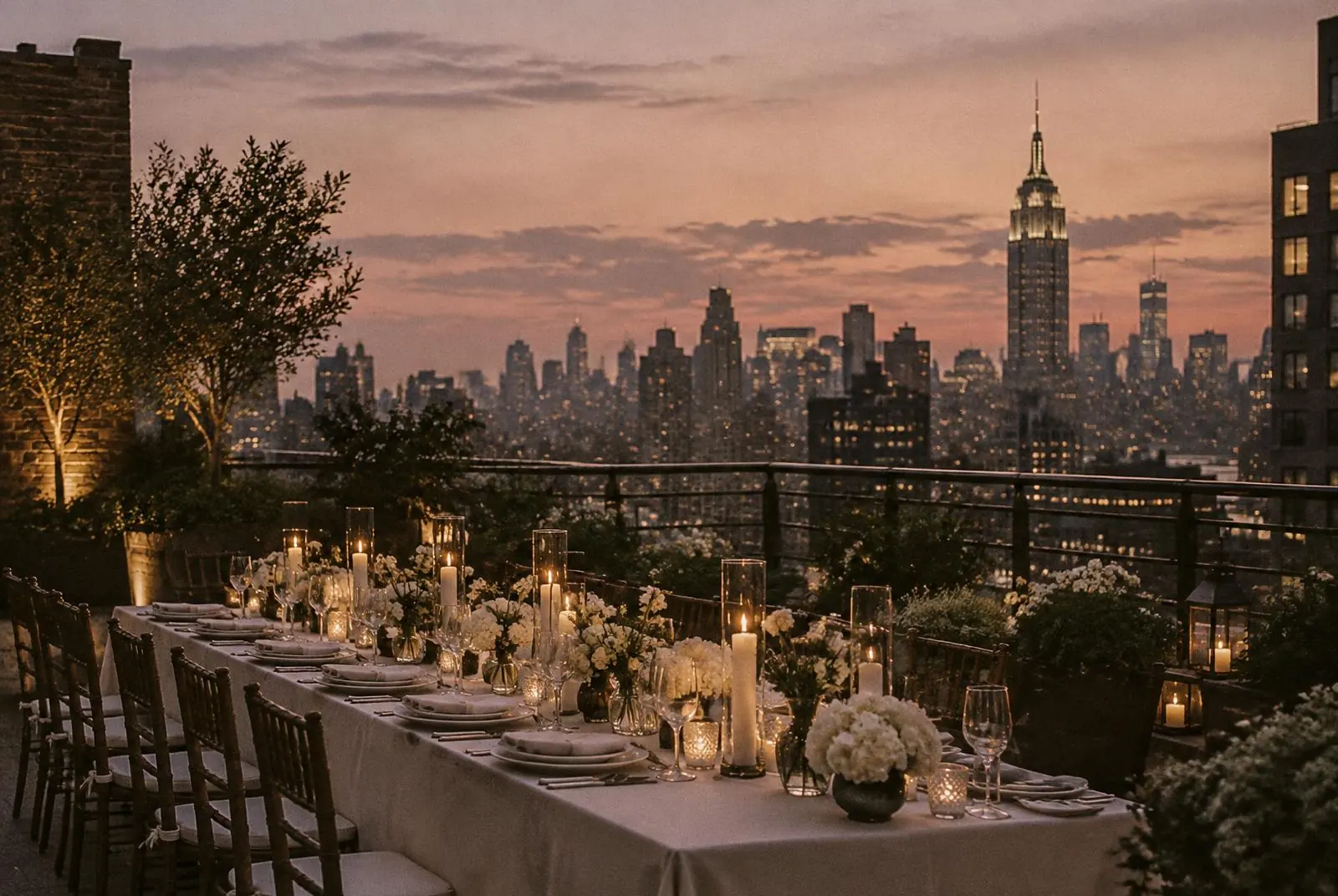
MANHATTAN & NEW YORK CITY
NYC Wedding Planner, city-minded
New York wedding planning that gives the celebration room to breathe and the production a proper schedule.
New York City, New York
An NYC wedding planner turns a city full of possibilities into a wedding your guests can navigate and your vendors can execute. Vellum & Vow Wedding Planners plans New York City celebrations around your priorities, with the building, budget and guest experience considered together. A beautiful room matters. So does getting the band into it.
You might want a black-tie dinner near Central Park or a restaurant reception downtown. We match you with the planner on our team who fits your date, location, guest count and style. That planner leads the work, translating your choices into decisions the venue, caterer and production team can use.
Planning a wedding in New York City: what to know
New York wedding planning depends on building access as much as the reception schedule. Load-in windows, freight elevators and building rules determine how much installation is possible. Ask about vendor insurance requirements, delivery routes and removal deadlines before committing to a design that needs hours the venue cannot provide.
Your NYC wedding planner should coordinate the florist, rentals and entertainment around one workable access plan. A passenger elevator is not automatically available for equipment, and a curbside arrival does not mean a truck can wait there. Our guide to choosing a wedding venue gives you a framework for comparing the room with the obligations behind it.
Which New York venue format suits your plans?
The best venue format fits both your hospitality priorities and the production your celebration needs. Start with the meal, guest count and music, then compare spaces.
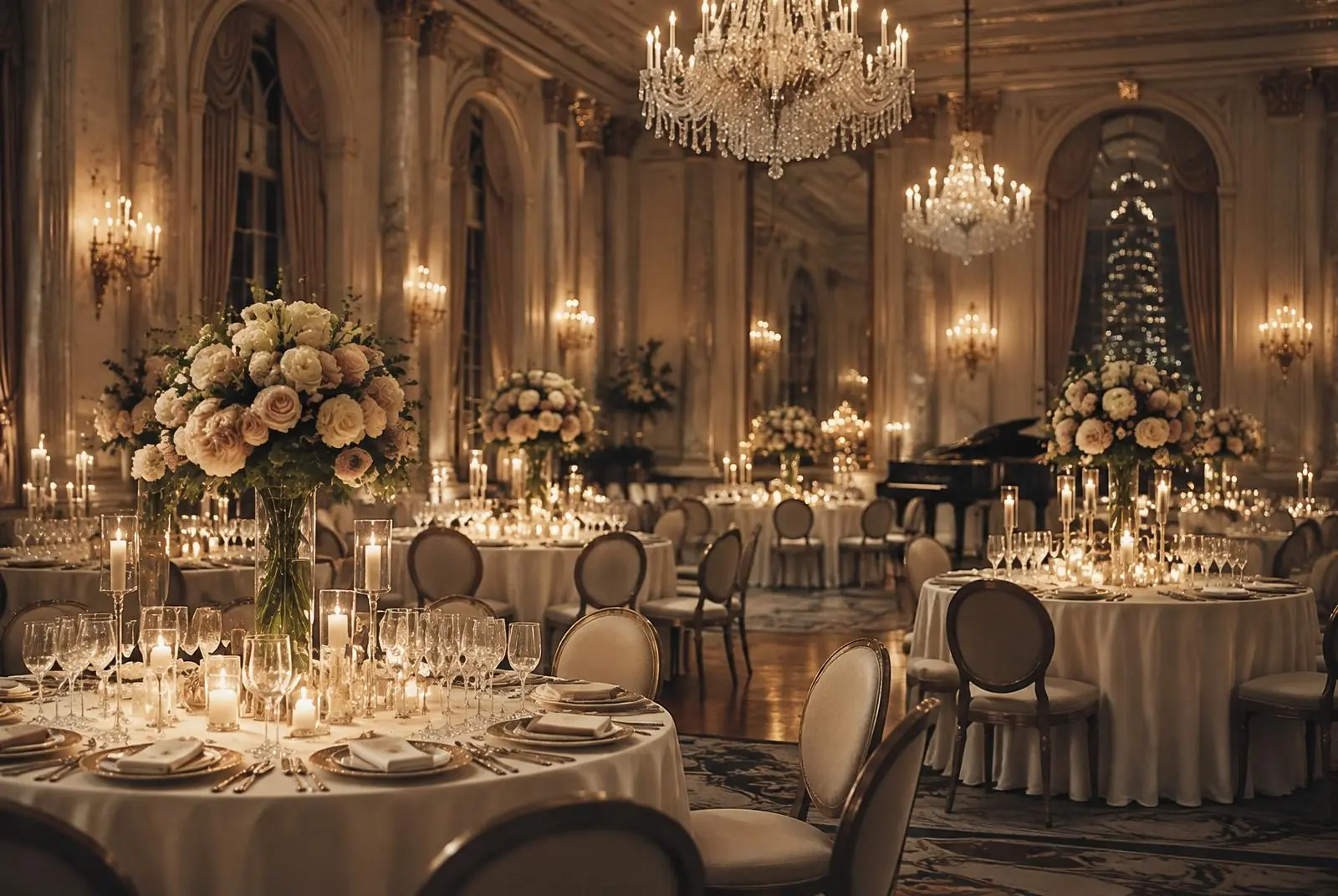
Hotel ballrooms
Keep guest rooms and event spaces under one roof. Review shared public areas, room access times and the distance between ceremony and reception floors.
Rooftop spaces
Offer an open-air city perspective with weather and sound considerations. Confirm the indoor alternative has enough room for dinner and dancing, not just standing cocktails.
Restaurant buyouts
Put food and service at the center. Clarify buyout hours, furniture flexibility and the effect of speeches or dancing on normal dining circulation.
Lofts and galleries
Provide flexibility but may require substantial rentals and production. Check power, kitchen facilities and freight access before comparing the hire fee with an equipped venue.
Private dining rooms
Suit smaller guest lists and conversation-led celebrations. Assess table arrangement, speech acoustics and where coats and gifts will go during dinner.
Historic interiors
Bring architectural character with possible installation limits. Ask about protected surfaces, candle rules and any restrictions on attaching lighting or floral structures.
Tell us your date and we'll tell you if we're free.
Which Manhattan neighborhoods should you consider?
Choose a neighborhood around your celebration's rhythm and guest base, then test the actual trips between addresses.
The Upper East Side, the Upper West Side and the area around Central Park invite different routes even when addresses appear close on a map. Midtown can simplify some hotel arrangements, but event traffic and street activity still need attention. A Manhattan wedding planner checks the ceremony-to-reception route at the relevant hour rather than relying on mileage.
Chelsea, the West Village and SoHo offer different scales of streets and buildings; Tribeca and the Financial District need their own delivery and pickup plans. Compare Brooklyn wedding planning for a different neighborhood feel, or Hoboken and Jersey City weddings if a river crossing is part of your venue search.
- the Upper East Side
- the Upper West Side
- Midtown
- Chelsea
- the West Village
- SoHo
- Tribeca
- the Financial District
- the area around Central Park
How should you time a city wedding?
A city wedding timeline should begin with access hours and work backward from dinner service. Installation, room resets and the final equipment collection all need real time. Ask which charges apply if production exceeds the agreed window, with any unconfirmed business costs marked [CONFIRM].
An NYC wedding planner also checks the date against major local activity and likely transport disruptions. Winter means earlier darkness for portraits; summer rooftops need a heat plan as well as a rain plan. Our wedding planning timeline helps separate decisions that belong months ahead from tasks that can wait.
How should guests travel between city events?
Guest transportation should be planned by address, mobility needs and time of day. Penn Station and Grand Central serve different rail routes, while airport arrivals through JFK, LaGuardia or Newark Liberty require separate onward instructions. Don't describe all three airports as an equivalent taxi ride.
Your NYC wedding planner can build a pickup sequence that avoids sending guests to an unsafe or impractical curb. Coaches need suitable loading arrangements, and smaller vehicles may suit some streets better. If guests are staying outside the city, compare Westchester and Hudson Valley wedding planning, Bergen County weddings and Long Island and Hamptons weddings before assuming a late-night return will be simple.
Where should you reserve hotel rooms?
Reserve rooms where guests can reach your events comfortably, not automatically beside the most recognizable landmark. A hotel near the reception can reduce end-of-night transfers, while a ceremony hotel may help families preparing together. Compare both arrangements against your actual schedule.
An NYC wedding planner helps organize block options and information about booking deadlines, release terms and any obligations you would accept. Confirm accessible-room availability directly with the hotel. Keep guest communication precise about check-in times, luggage storage and breakfast, especially when an early ceremony falls before rooms are available.
In New York, the floor plan and the freight elevator schedule belong in the same conversation.
What support does your New York celebration need?
Select support by the decisions still ahead of you. If you're searching for a luxury wedding planner New York couples can approach with practical questions, start with scope rather than labels; pricing is [CONFIRM].
- Full-Service Wedding PlanningFull-service wedding planning supports venue selection, budget development and vendor planning for couples starting early; book before major contracts so building constraints inform the plan from the beginning.Explore
- Partial Wedding PlanningPartial wedding planning addresses agreed gaps for couples with a venue or vendors already booked, continuing through the remaining planning period with responsibilities defined at the outset.Explore
- Wedding Design & StylingWedding design and styling connects the visual direction with floor plans, tabletop choices and installation needs; engage this support before committing to rentals or large floral structures.Explore
- Wedding-Day & Month-Of CoordinationWedding-day and month-of coordination organizes the run-of-show, vendor communication and ceremony cues for couples who have done the planning; confirm the preparation period when discussing availability.Explore
Nearby places we plan weddings
From the Planning Guide
- How to Choose a Wedding Venue in New Jersey, New York or ConnecticutCompare tri-state venue styles, ask better questions on tours, and build a complete cost picture before choosing the place where your guests will gather.Explore
- The 12-Month Wedding Planning Timeline for NJ, NY & CT CouplesA month-by-month plan for tri-state couples, connecting booking deadlines, hotel blocks, guest travel and weather decisions so you know what deserves your attention next.Explore
QUESTIONS COUPLES ASK
New York City wedding planner questions
Do we need a planner if our venue has an event manager?
A planner and a venue event manager usually have different responsibilities. The venue team oversees its space and contracted services, while a planner coordinates the wider wedding plan and independent vendors within your agreed scope. Ask both teams to explain ownership of transport, ceremony cues and personal items before assuming a task is covered.
Can a rooftop be our only ceremony plan?
A rooftop needs an approved weather alternative before it becomes a dependable ceremony plan. Confirm where guests would sit indoors and whether that space conflicts with reception setup. Your planner coordinates the decision timing with the venue and vendors so chairs, sound and florals can be ready without guests waiting for a forecast discussion.
How do you manage short load-in windows?
We build the production schedule around the access the building actually allows. That means checking freight reservations, delivery sequencing and setup labor with vendors before the installation is finalized. If the design cannot reasonably fit the available window, the sensible options are to simplify it or discuss additional access with the venue.
Should we provide guest transportation in Manhattan?
Provide transportation when it solves a real access problem for your guests. A short distance can still be difficult in formalwear, bad weather or for someone with limited mobility. We compare walking routes, pickup locations and realistic driving time, then make the plan clear enough that guests aren't guessing which option they should use.
When should we inquire about an NYC wedding planner?
Inquire once you have a date or season and an approximate guest count, ideally before committing to a venue if you want full-service support. Share what you've already booked so the conversation starts in the right place. Vellum & Vow is now booking 2026 and 2027 weddings, with individual date availability requiring confirmation.
BEGIN WITH YOUR DATE
Meet your NYC wedding planner, city-ready
Share your date, guest count and the New York celebration you're considering. We'll match you with the planner who fits your plans.